Part 1: Hacker News Fundamentals
Understanding Hacker News
HN is not a marketing channel — it's a community of builders who share and discuss interesting things. Your content needs to genuinely interest this audience.
What works:
- Deep technical content
- Authentic problem-solving stories
- New information that satisfies curiosity
- "Hacker to hacker" communication
What doesn't work:
- Obvious promotional content
- Marketing-speak
- "10 secret ways to..."
- Corporate messaging
Part 2: The HN Launch Formula
The Tailscale Framework
Tailscale consistently hits the front page. Here's their pattern:
Problem → Obvious Solution → Why Obvious Solution Fails → Product → How It Works
This structure:
- Validates the reader's existing knowledge
- Shows you understand the problem deeply
- Positions your solution as a natural evolution
Title Strategy
The Power of Understatement:
Tested variations:
- "Getting a paper accepted" → 219 upvotes
- "How to Get Your Paper Accepted" → 3 upvotes
- "Your Paper Is an Ad" → 2 upvotes
Winner: The understated, story-like title.
Best practices:
- No "10 secret ways to..."
- No "gain X by doing Z"
- Use to-the-point titles: "I sell onions online" or "Tailscale Funnel"
- Authentic storytelling over marketing language
Content Structure
- Create something that doesn't feel promotional — Your post should teach, share, or inform first.
- Explain benefits through problems — Don't list features. Explain the pain you solve.
- Go deep with new information — HN readers want substance. Don't hold back.
- Satisfy curiosity about "how it works" — Not "how to gain X by using Y" but rather "How to build Y from scratch"
- Write dev-to-dev, conversational — Use technical jargon. Don't dumb it down.
Post Length
Some of the best launches are long.
fly.io example: Hundreds of words explaining the technical approach in detail.
Rule: Use 700 words if that's what it takes to explain your approach properly. Better too thorough than too thin.
Part 3: Preparing for Launch
GlassFlow Case Study
They reached #1 on Show HN and stayed there for 12+ hours. Key learnings:
- Follow the guidelines exactly — Use the format that works, the right tone of voice.
- Spend the biggest chunk on the problem — Explain the problem and why obvious solutions don't work.
- Prepare for success — The last thing you want is hitting the front page with a bad experience waiting.
- Explain how it works in detail — What you tried, why it didn't work. "Hacker to hacker."
Before launch, audit:
- Signup flow
- Docs
- First hello world experience
- Support response time
The Preparation Timeline
GlassFlow took a week to rework their post based on feedback:
- First draft (too high-level)
- Feedback round
- Rewrite to more technical, straightforward explanation
- Final review
- Launch
Don't rush this process.
Part 4: Writing Your Show HN
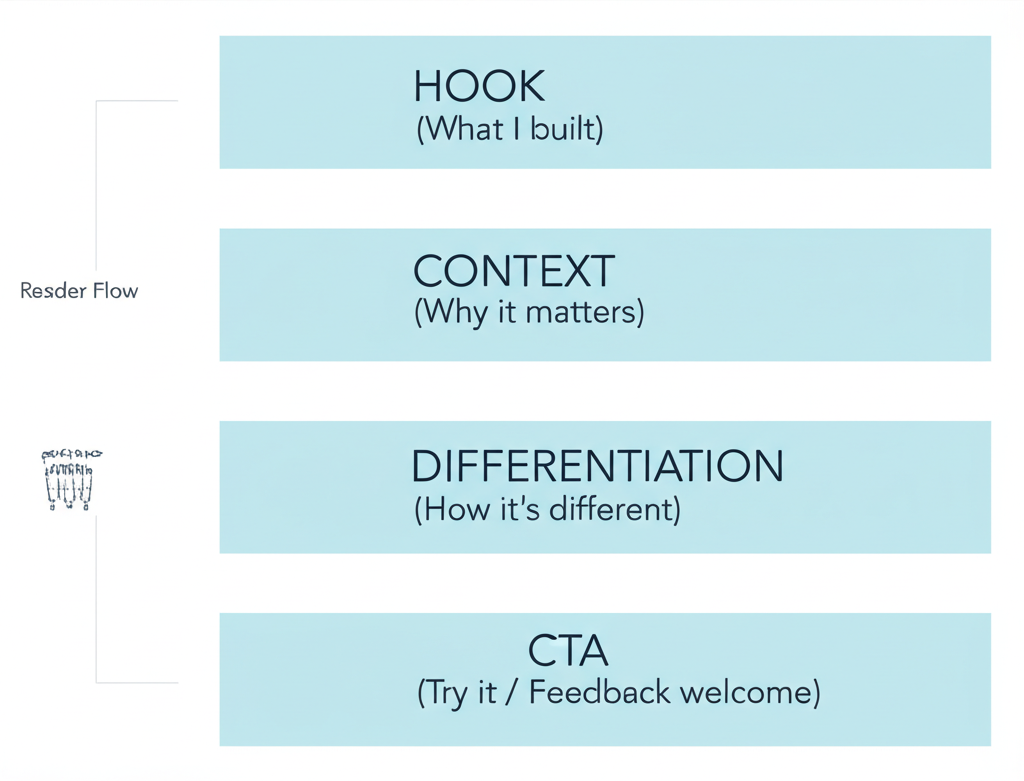
The Information Flow
Lead with:
- What the problem is
- Who has this problem
- Why current solutions fail
Then:
- What your solution does differently
- How it works (technical detail)
- What makes your approach novel
End with:
- Where to try it
- What feedback you want
- Invitation to discuss
Tone Calibration
Do:
- Use "we" or "I" — be personal
- Admit limitations
- Ask genuine questions
- Show technical depth
- Be humble about your claims
Don't:
- Sound like a press release
- Use marketing superlatives
- Oversell
- Ignore tradeoffs
- Sound corporate
Part 5: Reddit/HN Cross-Posting
The Reddit-Then-HN Trick
Post first on relevant subreddits to:
- Validate messaging
- Gather initial feedback
- Refine your explanation
- Build some initial traction
Then bring a refined version to HN.
Part 6: Product Hunt Launch
The PH Playbook (Matteo Tittarelli)
This playbook has gotten 3 tools to #1 of the day/week.
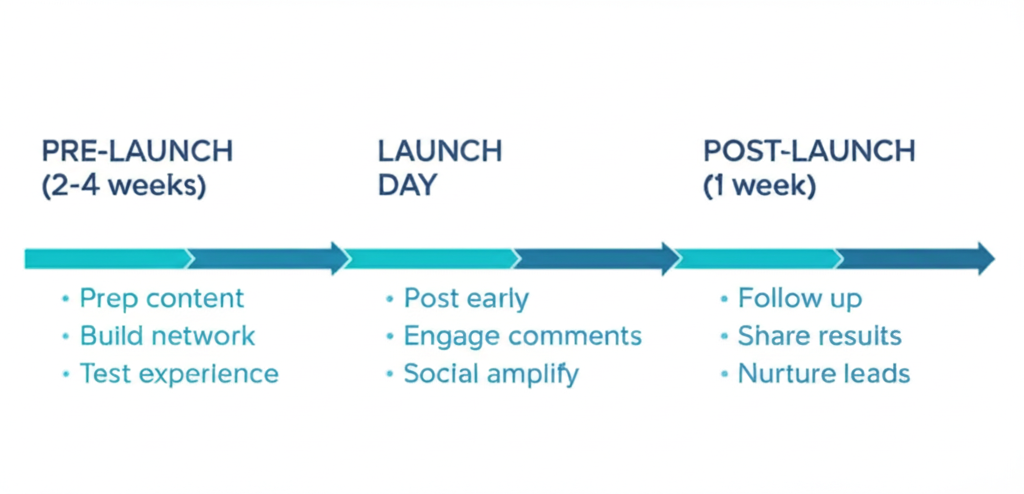
Pre-Launch (2-4 weeks before)
- Build your hunter network
- Identify relevant hunters
- Reach out early
- Prepare materials for them
- Prepare assets
- High-quality screenshots
- Product video (short, punchy)
- Compelling tagline
- Description that hooks
- Seed your launch
- Tell your community
- Email your users
- Prep social posts
Launch Day
- Timing
- Launch at 12:01 AM PST (PH resets at midnight Pacific)
- Have team ready for early hours
- First hour is critical
- Activate your network
- Respond to every comment
- Share on social immediately
- Throughout the day
- Continuous engagement
- Cross-post updates
- Thank supporters
Post-Launch
- Follow up
- Thank everyone who supported
- Share results
- Announce what's next
- Convert interest
- Special offers for PH audience
- Capture leads
- Nurture relationships
Part 7: Launch Weeks
The Supabase Model
Why launch weeks work:
- Push velocity with static deadline
- Rally team around promotion
- Condense promotion for concentrated mindshare
- Create anticipation and momentum
Launch Week Structure
Day by day:
- Each day = one feature/announcement
- Build toward biggest reveal
- Maintain momentum through variety
- End with a bang
Content for each day:
- Technical blog post
- Social announcement
- Demo/video
- Community engagement
Learnings from Resend
- Don't announce everything at once
- Create daily reveals
- Have backup content ready
- Engage community throughout
Part 8: Advanced Strategies
Prepare for Success, Not Just Launch
The GlassFlow lesson: They prepared their entire developer journey before launch because they knew the worst thing would be hitting #1 with a bad experience.
Before any launch:
- Audit your core developer journey
- Test signup → first value
- Ensure docs are solid
- Have support ready
- Prepare for traffic spike
The "Launch Then Iterate" Trap
Don't:
- Launch before you can support the interest
- Ignore feedback in comments
- Disappear after launch
Do:
- Stick around to engage
- Take feedback seriously
- Ship improvements quickly
- Follow up publicly
Engineering-as-Marketing for Future Launches
Create free tools that build reputation before your product launch:
- ElevenLabs' speech-to-text tools
- Auth0's JWT debuggers
- Algolia's Hacker News search
When you launch the paid product, you already have credibility.
Quick Reference: Launch Checklist
Pre-Launch (2 weeks before)
- Developer journey audited and working
- Docs complete and tested
- Support system ready
- Launch post drafted and reviewed
- Network/community informed
- Social posts prepared
- Launch day team assembled
Launch Day
- Post goes live at right time
- Immediate social amplification
- Founder present in comments
- Responding to all questions
- Monitoring for issues
- Capturing feedback
Post-Launch
- Thank supporters publicly
- Address feedback received
- Share results transparently
- Plan follow-up improvements
- Nurture new relationships
Resources & Further Reading
Hacker News Strategy
- How to Get on Hacker News Front Page (Tailscale Framework)
- How to Launch a Dev Tool on Hacker News
- HN Official Guidelines for Show HN
- HN Search (Algolia) — Research tool
Product Hunt
- Product Hunt Launch Playbook — Matteo Tittarelli (3x #1 launches)
- Marketing Dev Tools on Product Hunt (Video) — Flo Merian
Case Studies
- GlassFlow Case Study: #1 on Show HN
- fly.io HN Launch Description Example
- Lago HN Post "Billing systems are a nightmare" — 777 upvotes
Podcasts
- Lago Founder on Getting to Top of HN — Scaling DevTools
- DevFirst Newsletter — Francesca Krihely (DevEx at Snyk)