Part 1: Content Philosophy
Writing for Developers
Developers are different readers:
- They want "how-to" code, not business value
- They prefer specific over general
- They appreciate technical depth
- They detect fluff instantly
"Don't be too high-level and talk about the business value or benefits — show me the 'how-to' code."
The One Reader Principle
Write for "one developer." Share a story that makes it obvious this article is written for them specifically.
Key elements:
- Clear introduction about what the article covers
- Know the one thing you want readers to remember
- End with suggestions for related content
Hiring Developers as Writers
Auth0 approach: Hire developers at normal dev salary to write articles full-time.
Pitch to developers: You'll learn and explore things you didn't have time for in a regular dev job.
Result: Authentic technical content at scale.
Part 2: Content Types That Work
The Debugging Story
One of the best content types for senior developers.
GitLab example: Article about how a Go fix sped up their service by 30x.
Structure:
- The symptom we noticed
- What we investigated
- What we tried that didn't work
- The actual root cause
- The fix
- What we learned
Why it works:
- Authentic
- Educational
- Shows technical depth
- Shareable
The Jobs-to-Be-Done Post
WorkOS example: Masterclass in JTBD content.
Structure:
- The job to be done (not feature)
- Why it matters
- How to accomplish it
- Where the product helps
The "How We Built X" Post
Popular on Hacker News.
Structure:
- What we built
- The constraints we faced
- Approaches we considered
- Why we chose our approach
- Technical details
- What we'd do differently
The Comparison Post
Developers search competitively.
Structure:
- Honest comparison of options
- When to choose each
- Your take (but honest)
The Tutorial
Classic but still works.
Best practices:
- Specific outcome
- Copy-paste code
- Real working example
- Troubleshooting tips
Part 3: Content Frameworks
keyBoard / whiteBoard / Boardroom
Create content for each audience:
| Type | Audience | Content |
|---|---|---|
| keyBoard | Individual dev | How-to, tutorials, code examples |
| whiteBoard | Architect | Design patterns, architecture guides |
| Boardroom | CTO/VP | ROI, case studies, risk mitigation |
The Radiating Circles
Product → Docs → Content → Community
Content is the third circle. Ensure product and docs are solid before investing heavily.
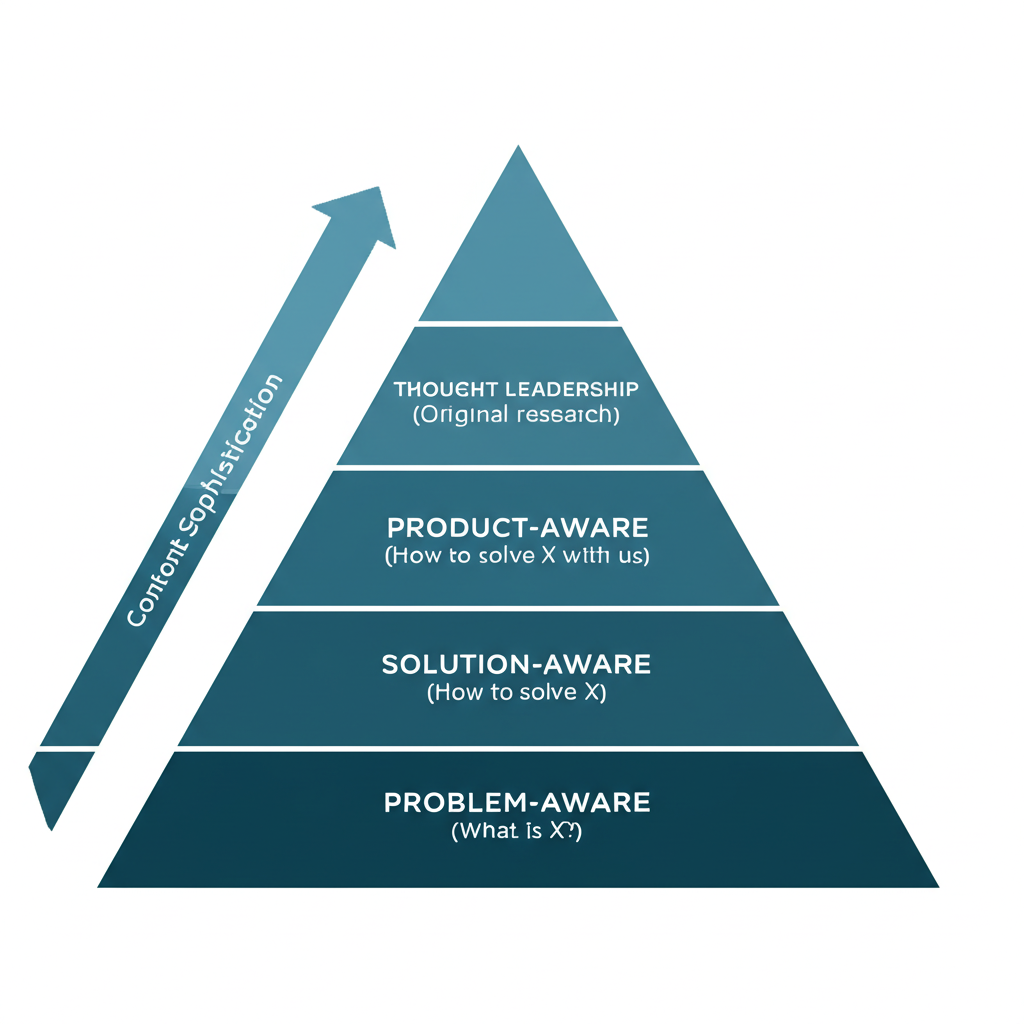
Content Maturity Levels
Level 1: Problem-aware content
- "What is X?"
- "Why X matters"
Level 2: Solution-aware content
- "How to solve X"
- Tutorials, guides
Level 3: Product-aware content
- "How to solve X with [Product]"
- Integration guides
Level 4: Thought leadership
- Original research
- Industry perspectives
- Deep technical dives
Part 4: Content Distribution

SEO for Developers
Cronitor case study: Created a page for every "run cron job + [time]" query.
Why it works:
- Long-tail keyword capture
- Command/error based queries are templateable
- Each page = solution + product pitch
The Programmatic SEO Pattern
- Identify query pattern developers search
- Create template for answering
- Generate pages at scale
- Each page = small pitch for product
Syndication Strategy
Should you repost to Medium/Dev.to?
Pros:
- Built-in audience
- SEO benefits (canonical link)
- Discovery
Cons:
- Traffic goes there, not your site
- Limited control
Guidance: Syndicate with canonical links to your site.
Newsletter Distribution
Your own newsletter is valuable for:
- Direct relationship with developers
- Ability to promote new content
- Feedback channel
- Community building
Part 5: Blog Design & CTAs
Blog Sidebar Design
Purpose: Keep readers engaged and guide next actions.
What to include:
- Related posts
- Newsletter signup
- Product CTA (subtle)
- Popular posts
Blog CTAs That Work
The balance:
- Too aggressive: Developers ignore
- Too subtle: No conversion
V7 approach: CTAs that are relevant but not "obviously an ad."
CTA placement:
- After introduction (for long posts)
- Within relevant sections
- At end of article
- Sidebar (persistent)
Top of Article Pattern
After reading, suggest: "If you have time, you may also want to read about XYZ"
This keeps developers on site and builds expertise perception.
Part 6: SEO Strategy
The Digital Ocean Content Strategy
Key learnings:
- Massive tutorial library
- SEO-focused titles
- Consistent format
- Deep technical content
Snyk Advisor Case Study
SEO-driven product growth through:
- Package analysis pages
- Security vulnerability pages
- Generated at scale
- Each page = product introduction
Engineering-as-Marketing
Create free tools that rank:
- ElevenLabs: Speech-to-text tools targeting keyword searches
- Auth0: JWT debuggers
- Algolia: Hacker News search
New opportunity: AI-powered platforms (Lovable, Replit, v0) enable marketers to build tools independently.
GitHub Search Optimization
Key factors:
- "About" section keywords (% of keywords to total words matters)
- Topics (one-word, extend About coverage)
Part 7: Content for Different Channels
LinkedIn Content
What works:
- Architecture diagrams + explanation
- Personal founder stories
- Dev tool learnings
- Memes (yes, memes)
Format tips:
- Hook in first line
- Validation in middle
- Push to comments/link
Twitter/X Content
Supabase approach:
- Understand audience
- Memes and jokes for devs
- Dev jargon
- Visual tweets that pop
Tweet thread format:
- Hook with story
- Validate with middle
- Push to next tweet
Diagrams
Why they work:
- "Smell" like value
- Highly shareable
- People want to feel smart/helpful
Even low-quality diagrams get shared if they appear valuable.
Part 8: Thought Leadership
The Authority Building Path
- Share learnings publicly
- Create original research
- Own a topic/problem space
Neo4j example: Graph database newsletter that owned "graph thinking" before pushing product.
Research-Based Content Factory
Examples:
- jFrog: Developer security surveys
- Tailscale: Technical deep dives
Process:
- Conduct research (surveys, data analysis)
- Publish findings
- Get industry coverage
- Become the source
Alpha Developer Strategy
Target "alpha developers" who speak to other devs.
These are:
- Active in communities
- Write/speak publicly
- Influence tool decisions
Content that reaches them spreads organically.
Part 9: Content Operations
Content Calendar
Cadence options:
- Weekly: Maintains momentum
- Bi-weekly: Sustainable quality
- Monthly: Deep, comprehensive
Mix content types:
- 60% tactical tutorials
- 20% thought leadership
- 10% product announcements
- 10% community content
Repurpose Strategy
Sales conversations → Content: Convert effective sales explanations into self-serve content.
One piece → Multiple formats:
- Blog post → Twitter thread
- Blog post → LinkedIn post
- Blog post → Newsletter section
- Blog post → Video script
Content Measurement
What to track:
- Traffic (by source)
- Time on page
- Scroll depth
- Signups attributed
- Self-reported attribution mentions
Part 10: Getting Started
The Minimum Viable Content Strategy
- One excellent tutorial solving common problem
- One case study with real customer
- One "how we built X" showing technical depth
- Consistent publishing (even if monthly)
Building the Team
Options:
- Developer advocates who write
- Developers paid to write (Auth0 model)
- Technical writers with dev background
- Freelance dev writers
Content Tools
Writing:
- Notion/Google Docs for collaboration
- Grammarly for editing
- Code snippet tools (Carbon, Snappify)
Distribution:
- Buffer/Hootsuite for social
- ConvertKit/Beehiiv for newsletters
- Your blog platform
Quick Reference: Content Checklist
Before Writing
- Clear audience defined
- One key takeaway identified
- Format chosen (tutorial, story, etc.)
- Distribution plan ready
During Writing
- Technical depth appropriate
- Code examples included
- Screenshots where helpful
- CTAs placed thoughtfully
After Publishing
- Distributed on social
- Added to newsletter
- Shared with community
- Tracked in analytics
Resources & Further Reading
Content Strategy
- Deep Dive into DigitalOcean Content Strategy
- keyBoard vs whiteBoard vs Boardroom Content — William Chia podcast
- Writing Good Developer Content
Content Types
SEO & Distribution
- Snyk Advisor SEO Growth Loop — Ben Williams
- FIRE Framework for Measuring Content Marketing — Jared Waxman
- Should You Repost to Medium/Dev.to?
Podcasts
- Growing a Developer Blog to 3M Annual Visitors — Jakub Czakon (Neptune.ai)
- Pipeline Podcast with Gonto (Auth0) — Hiring devs to write content
Developer Behavior
- How Developers Stay Up to Date — Jono Bacon
- How Developers Consume Content — Jono Bacon